The Dead Man on the Rail
Click here to go back to the Hub Page
In the winter of 1826, Frederick Fisher had reason to feel secure. His land near Campbelltown was cleared and fenced, his stock moved along the roads in numbers that drew eyes in town, and his house had a stone chimney and glass windows. He had come to New South Wales as a convict. He had gained freedom and then property. Fisher did not forget how the property was made. He checked his accounts. He counted his animals. Lately he had been checking the accounts kept by his manager, Worrall.
Worrall was also an emancipist. He had worked for Fisher for two years. He knew the station, the men, the buyers. Fisher had trusted him. But trust had worn thin. Fisher found a load of wool recorded at a low price. He asked for the receipt. Worrall found it. Fisher asked why four cattle had been sold in May without his signature. Worrall said the buyer had been in a hurry. Fisher did not argue. He wrote a note in the margin and told Worrall they would review the books together on Monday.
Worrall’s answers were good. His hands were steady. His face stayed composed. But he understood Monday. By Monday Fisher would have examined every sale, every debt, every small authority Worrall had used in his name. Worrall had no other position. Without Fisher’s property he had nothing. At the end of June, Fisher did not come to town. He did not come to the station. Worrall said he had gone to Sydney and then taken a ship for England. The decision had been sudden. Fisher had left the station in Worrall’s care. Men accepted the story at first. Ships did leave. A man with property could afford passage. But some details did not sit well.
Fisher had visited no one to say goodbye. He had not settled with the blacksmith or written to the factor in Sydney. His good coat and boots were in the house. His chest held his papers. Worrall moved through the station with growing ease. He gave orders. He sold stock. He paid wages. He spoke of Fisher’s return as uncertain, perhaps in a year. By September a reward was posted for information about Frederick Fisher. Worrall said it was a fine thing, that someone in England would answer soon. But the road past the paddocks carried fewer greetings than before.
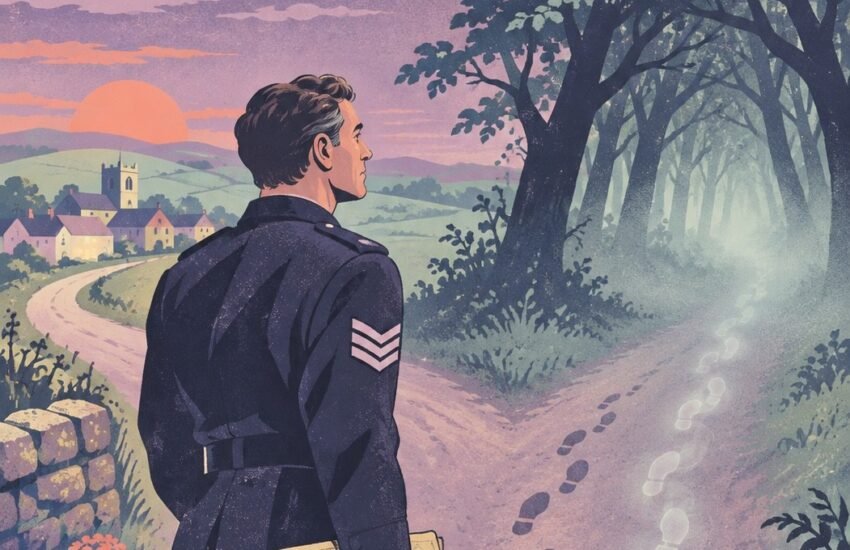
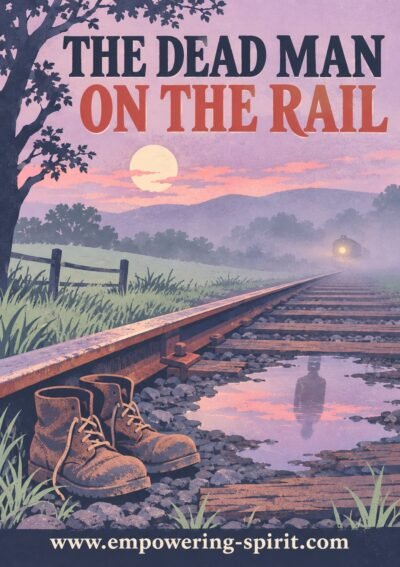
Late in September, Dr. Farley was returning from market. He had bought a new bridle and a bolt of linen for his wife. The road outside Campbelltown ran between low timber fences and paddocks brown with the dry season. The light was failing but still clear. Farley saw a man sitting on a top rail beside the road. The man wore a dark coat. His boot hung above the ground. Farley knew the shape of him before he saw the face. It was Frederick Fisher.
“Mr. Fisher,” Farley called. The man did not answer. Farley rode nearer. “Fisher.” Still nothing. The figure sat motionless. Farley saw blood. It ran from the hairline down the temple and along the jaw. It was dark, dried. The man’s hands rested on his thighs. His face was pale. Farley pulled the horse to a stop and climbed down. “Are you hurt?” he said.

Fisher did not speak. Farley took two more steps. Fisher lifted his right arm and pointed beyond the fence. The hand was steady. Farley looked where it pointed. He saw rough grass, scattered stones, and a line of scrub along the creek. Nothing moved. When he looked back, the rail was empty. No coat, no boots, no man. Farley stood in the road. The horse turned its head. He looked for a gate. The fence ran unbroken in both directions. He walked to the rail and searched behind it. He called Fisher’s name. The paddock swallowed the sound. In the scrub there was no one.
Farley rode into Campbelltown. He went to the constable. “I have something to tell you,” he said. “I saw Fred Fisher this evening on the fence near his paddock. He had blood on his face. When I spoke to him he pointed beyond the fence, and then he was gone.” The constable asked if he had been drinking. Farley said he had drunk tea at the market. The constable knew Farley as a practical man. He did not say the word apparition. He said he would ride out in the morning. Farley insisted. “I recognized him. And there is blood on the rail. I will show you.”
They went at first light. The rail was where Farley had stopped. Dark stains showed on the grey timber. The constable put a finger to them. Dry. He scraped a fragment into a paper. “That is blood,” he said. “Human or animal, I cannot say. But it is blood.” He looked along the fence and then at Farley. “You are certain he sat here?” Farley said, “He sat there and pointed toward the creek.”
The constable sent word to Sydney for trackers. Two men arrived within days, men who had tracked for police before and knew the country around Campbelltown. They did not ask about Farley’s story. They began at the rail. One crouched and looked at the stains, then at the ground beneath. The other moved slowly along the fence, then into the paddock. They spoke to each other in their own language, then to the constable in English. A man had been killed here, or had fallen hard. The blood was human. The soil near the rail had been scuffed, then partly smoothed. Grass had been crushed and broken, not by stock.
The constable, Farley, and several riders followed. The trackers did not move straight. One pointed to a heel print in dry earth. The other found a wattle branch snapped and hanging, and a stone turned darker side up. The trail crossed the paddock at an angle and left through a gap in the fence, though no gate showed on any map. The country beyond was low and rough. The trackers kept on. Farley tried to see what they saw. Sometimes he could, after they pointed. More often he saw only bush. But they never hesitated.
At the creek they stopped. The ground there had been dug and covered. Broken branches lay over it. The men brought spades. The constable told two of them to dig. The digging was slow. At three feet they found cloth, then a boot, then a body wrapped in a blanket. Farley looked away and then looked back. The coat was the dark coat he had seen on the rail. The constable removed a fold from the face. It was Fisher. The trackers stood back. The local men grew quiet. “He did not go to England,” the constable said. “He was killed near that fence and carried here.” No one contradicted him.

Ready for an adventure?
If you enjoy Tarot, symbolism, mystery, and strange encounters beyond ordinary reality, you might enjoy my novel series The Tarot Dimes. Step into a story of intuition, spirits, secrets, and unexpected turns. → Read more
News reached the town before the riders did. Worrall was waiting at the station when the constable came. He gave the same story. Fisher had gone to England and left him to manage. The constable asked why Fisher had left his coat and boots. Worrall said Fisher had bought new things in Sydney. The constable asked why no one at the port recalled him. Worrall said the passage had been arranged quietly. The constable asked about the blood on the rail. Worrall said he knew nothing of it. His voice stayed even. But the constable had learned that Worrall had sold more stock in July, and used the money to pay his own debts. Worrall wore Fisher’s watch. When asked, he said Fisher had given it to him before sailing. The constable arrested him that evening.
At the trial the court heard no ghost. The authorities kept Farley’s sighting out. A dead man on a fence would invite laughter and give the defence room to poison the jury. Farley gave evidence only that he had ridden that road, had noticed a stain on a rail, and had shown the constable where it was. He did not say what first turned his eye there. The prosecution set out the cold facts. Fisher had made no preparations for a voyage. His coat, boots, papers, and money remained. Worrall had told everyone he had sailed. Worrall had controlled the property and sold stock. The blood on the rail was human. The trackers described the disturbed ground, the snapped branch, the displaced stone, and the trail from the fence to the grave. The body was Fisher’s.
Worrall’s counsel tried to shake the trackers. They repeated what they had seen. The court did not need Farley’s ghost. The jury returned quickly with a verdict of guilt. The judge sentenced Worrall to death.
In the days before his execution Worrall asked to see a magistrate. He sat with his wrists loose in front of him. “I killed Frederick Fisher,” he said. “I struck him at the fence. I carried him into the scrub and buried him. I told people he had gone to England because that was the only story I could hold.” He signed the confession. He did not mention the rail. The next morning he was hanged.
After it was over, the story moved through the district. Dr. Farley had seen the dead man on the rail, and the dead man had pointed, and the living had followed the pointing hand to the body. Some believed it; others said Farley had noticed blood and made the rest afterward. Farley did not argue. The blood weathered from the timber, and the road went quiet. The rail remained beside the paddock, the same grey rail where Fisher had sat and shown the living where to look.
This story is based on a true account included in Andrew Lang’s The Book of Dreams and Ghosts. You can read the original account in the free Project Gutenberg edition. And if you are interested in fresh and modern content about dreams that came true, you can find them in my book “Dreams That Wake You Up”, a collection of real dreams and real outcomes, directly from my clients, printed with their consent.
For more articles and stories from us, click here to go back to the Hub Page