
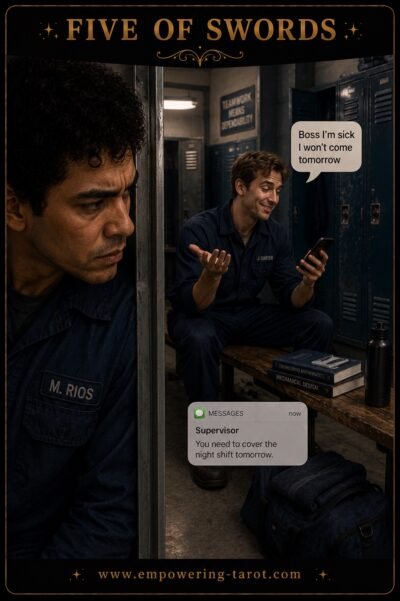
Five of Swords: Tarot Card Combinations
Click here to go back to the Tarot Course Hub
Click here to go to the general article about the Suit of Swords
🔗 How to Read These Card Combinations
Tarot becomes much easier to understand once you stop reading each card as a fixed definition and start reading it as part of a living exchange.
A single card may show the core energy of a situation, but combinations reveal how that energy behaves under pressure. They show what sharpens it, what softens it, what complicates it, what exposes it, and what kind of story begins unfolding when one force stands beside another.
That is why card combinations matter so much.
They help you move beyond static keywords and begin reading tarot as tension, atmosphere, consequence, and lived experience.
In this post, the Five of Swords is treated as the main card.
That means the Five of Swords is the central energy, and every other card listed here acts as a clarifier. The second card shows what kind of conflict is happening, whether the win is worth the cost, where the hostility comes from, what kind of damage lingers afterward, and whether the situation is strategic, defensive, cruel, necessary, or simply ugly.
The Five of Swords is a card of conflict, ego, hostility, hollow victory, mental warfare, and situations where someone may win while still damaging the atmosphere.
It often appears when tension has gone beyond playful friction and become sharper, colder, and more personal. A person may be fighting unfairly. Someone may be trying to dominate rather than resolve. Words may wound. Pride may take over. Or a person may walk away from a clash knowing they technically “won” but feeling no real peace in the aftermath.
There is sharpness here.
There is discomfort here.
And often there is the bitter little truth that not every victory is a clean one.
Keep in mind:
- The order matters. Five of Swords + The Tower is not the same as The Tower + Five of Swords.
- The situation matters. Conflict in love looks different than conflict at work.
- These meanings are starting points, not rigid laws.
- Let the structure guide you, then let the spread and your intuition refine the message.
What follows is a full list of all 77 other tarot cards in combination with the Five of Swords as the lead.
Let it help you learn.
Let it help you read.
And most of all, let it remind you that conflict in tarot is not only about who is right. Sometimes it is about what kind of energy a person is willing to become in order to get their way.
Five of Swords + The Major Arcana
+ The Fool
Conflict grows out of recklessness, immaturity, or someone acting without thinking through the consequences. This can show careless words, thoughtless behavior, or a clash caused by naivety that turns uglier than expected.
+ The Magician
The fight becomes strategic. Words, intelligence, persuasion, or manipulation are being used deliberately, and someone may be trying to outsmart rather than understand. A very sharp battle of will and mind.
+ The High Priestess
The hostility is quiet, hidden, or passive-aggressive. Not everything is being said openly, but the tension is real. Secrets, silent resentment, or unspoken knowing can make the atmosphere feel icy and psychologically intense.
+ The Empress
Conflict touches care, family, creativity, comfort, beauty, or self-worth. This can show jealousy, emotional neglect, or a clash that wounds something soft and life-giving rather than protecting it.
+ The Emperor
Power struggle dominates the situation. Control, authority, hierarchy, and dominance are all central themes here. Someone may be determined to be the one who stands tallest, even if the structure around them suffers for it.
+ The Hierophant
The conflict involves values, beliefs, institutions, marriage, tradition, or social rules. This can show an argument over what is right, what is acceptable, or who has the moral authority to define the truth.
+ The Lovers
A painful relationship conflict or choice shaped by division. This can point to betrayal, a cruel breakup, choosing one person over another, or a connection damaged by ego and bad communication.
+ The Chariot
No one wants to back down. The conflict becomes a battle of direction, momentum, and sheer force of will. Strong ambition may intensify the need to win instead of resolve.
+ Strength
A reminder that the higher path is restraint. The conflict is real, but this combination warns against becoming cruel simply because you are hurt. Quiet self-control is more powerful than retaliation.
+ The Hermit
Withdrawal follows the clash, or someone chooses distance rather than continuing the fight. This can also show feeling isolated after conflict, especially if harsh words have left emotional debris behind.
+ Wheel of Fortune
A conflict arises at a turning point. Circumstances are changing, and tensions flare as people react differently to the shift. What happens now may alter the course of the situation more than expected.
+ Justice
A very sharp combination for unfair treatment, arguments over fairness, legal conflict, or the need for accountability. This can also show someone trying to justify bad behavior rather than actually acting justly.
+ The Hanged Man
The conflict lingers without real resolution. Someone may be stuck in a battle they no longer even want, or suspended in an uncomfortable aftermath where no clean peace has yet arrived.
+ Death
A conflict ends something for good. This can point to a breakup, severed connection, major fallout, or a clash so serious that the relationship or situation cannot continue in the same form afterward.
+ Temperance
The situation desperately needs de-escalation. Balance, patience, and humility are the only things that can stop the conflict from becoming more destructive than it already is.
+ The Devil
A very harsh combination for manipulation, cruelty, obsession, power games, psychological warfare, toxic ego battles, or fighting dirty because part of the person enjoys domination.
+ The Tower
The conflict explodes. A fight, exposure, or argument becomes openly destructive, and whatever fragile stability remained is shattered. This is not a quiet disagreement. It is impact.
+ The Star
There is hope of healing after the damage, but not without honesty about what happened. This can show a chance to recover after conflict if ego is dropped and truth is faced.
+ The Moon
Confusion, suspicion, projection, and emotional distortion make the conflict worse. This can show hidden motives, misunderstandings, lies, or paranoia feeding the hostility.
+ The Sun
Everything is out in the open. The conflict becomes visible, undeniable, and impossible to pretend away. Sometimes this clarity helps resolution. Sometimes it simply exposes how ugly things have become.
+ Judgement
The conflict becomes a reckoning. Harsh truths, consequences, and wake-up calls come to the surface. A person may be forced to face what their behavior has cost them.
+ The World
A difficult chapter of conflict finally closes. There may be no perfect peace, but the cycle of tension, ego battle, or hostility reaches a point of completion or exit.
🃏 Five of Swords + Suit of Cups: Emotional Conflict, Hurt Feelings, and Relational Damage
When the Five of Swords meets the Suit of Cups, the conflict moves into the emotional realm. These combinations often point to hurt feelings, damaged trust, coldness in relationships, emotional manipulation, grief after arguments, and the pain that remains when words cut too deeply.
+ Ace of Cups
A new emotional beginning is damaged by conflict, mistrust, or unkindness. This can show a fresh connection spoiled early, or a vulnerable opening met with behavior that makes the heart shut down.
+ Two of Cups
A relationship clash is central. Mutual feeling may exist, but communication is poor, ego is high, or one person is trying to win instead of connect. A painful pairing for relational tension.
+ Three of Cups
Social fallout, friendship drama, or conflict involving groups, gossip, or third-party dynamics. This can show arguments in friend circles, public embarrassment, or celebrations spoiled by hostility.
+ Four of Cups
The conflict leads to emotional withdrawal. One person may shut down rather than keep fighting, leaving the atmosphere cold, unresolved, and quietly resentful.
+ Five of Cups
A harsh argument leads to regret, grief, guilt, or emotional damage. This is one of the heavier combinations for the sadness that follows saying or doing things that cannot simply be taken back.
+ Six of Cups
Old wounds, childhood patterns, former hurts, or long-standing emotional roles resurface. The conflict may feel strangely familiar, as though everyone is stepping into an old script they never healed.
+ Seven of Cups
Projection, fantasy, mixed signals, or emotional confusion worsen the hostility. People may be arguing with imagined motives rather than actual reality, which makes the whole thing even messier.
+ Eight of Cups
Someone walks away after the clash, not with peace, but because staying has become emotionally corrosive. A painful but often necessary exit.
+ Nine of Cups
Desire, pride, entitlement, or emotional self-interest becomes part of the problem. A person may want to have things their way so badly that they stop caring how the other person feels.
+ Ten of Cups
Conflict damages the dream of harmony. Family life, long-term love, emotional peace, or the image of shared happiness is wounded by ego, cruelty, or unresolved resentment.
🪄 Five of Swords + Suit of Wands: Ego Battles, Competitive Fire, and Hostile Momentum
When the Five of Swords meets the Suit of Wands, the conflict becomes hotter, more forceful, and often more competitive. These combinations often show rivalry, pride, aggressive ambition, reactive clashes, and situations where passion and ego turn a disagreement into a battlefield.
+ Ace of Wands
A spark becomes a fight. Fresh passion, attraction, or creative energy is quickly entangled with conflict, competition, or combative tension. Strong chemistry can also turn sharp very fast.
+ Two of Wands
The conflict is tied to plans, direction, or the future. People may be fighting over where things are going, who gets to decide, or whose vision will dominate.
+ Three of Wands
Expansion brings tension. Growth, distance, ambition, or rising expectations create conflict, especially if more people now want control over where the path leads.
+ Four of Wands
A clash disrupts peace, home, celebration, or a stable structure. This can show family arguments, relationship fallout, or conflict erupting in a place that was supposed to feel safe.
+ Five of Wands
A very charged combination. Conflict escalates from friction into hostility, or ongoing rivalry becomes more personal, sharper, and less innocent than before.
+ Six of Wands
Winning becomes the point. Recognition, status, public image, or being seen as “the one who came out on top” may matter more than repair, making the conflict especially ego-driven.
+ Seven of Wands
A person becomes highly defensive and combative. The hostility is active, and someone may be fighting to protect their position in a way that is increasingly exhausting and adversarial.
+ Eight of Wands
Arguments escalate quickly. Messages, accusations, or reactions fly fast, and the speed of communication makes the damage spread before anyone can slow it down.
+ Nine of Wands
The conflict has gone on too long. Wounds, defensiveness, and chronic mistrust are all present, and the atmosphere feels tired, sharp, and emotionally armed.
+ Ten of Wands
The fight becomes a burden. Hostility, resentment, and stress pile onto an already heavy situation until the emotional and practical cost becomes too much to carry.
🗡 Five of Swords + Suit of Swords: Double Air, Double Hostility
When the Five of Swords meets its own suit, the mental realm becomes colder, sharper, and more intense. These combinations often point to arguments, betrayal, cruelty, high-conflict communication, mental pressure, psychological warfare, and the bitter consequences of unresolved ego battles.
+ Ace of Swords
A harsh truth cuts through the conflict, or the conflict itself exposes something painfully clear. This can show brutal honesty, winning an argument but hurting someone deeply, or truth delivered without mercy.
+ Two of Swords
A stalemate after conflict. No one is truly resolving anything, but the hostility remains hanging in the air. Silence becomes part of the weaponry.
+ Three of Swords
Words wound deeply. Betrayal, cruelty, emotional damage, or painful arguments are strongly highlighted. One of the clearest combinations for conflict that leaves the heart bleeding.
+ Four of Swords
Withdrawal follows the fight. A person retreats because the conflict was too draining, too toxic, or too mentally corrosive to keep engaging with directly.
+ Six of Swords
A person leaves the conflict behind, or tries to. This can show moving away from hostility, but often while still carrying the emotional residue of what was said and done.
+ Seven of Swords
Deception, strategy, manipulation, and dishonest conflict are central. People may be fighting unfairly, hiding motives, or using underhanded tactics instead of clean confrontation.
+ Eight of Swords
The conflict becomes mentally trapping. Fear, shame, anxiety, or the sense of being psychologically cornered can make the situation feel impossible to think through clearly.
+ Nine of Swords
Conflict turns into torment. Sleeplessness, guilt, dread, and mental replaying of arguments are all emphasized. The battlefield has moved inside the mind.
+ Ten of Swords
A brutal ending, betrayal, or total collapse after conflict. This is one of the clearest pairings for a clash that goes too far and leaves real wreckage behind.
💰 Five of Swords + Suit of Pentacles: Practical Conflict, Workplace Hostility, and Real-World Fallout
When the Five of Swords meets Pentacles, the conflict enters the practical world. These combinations often show workplace tension, fights over money or resources, disagreements about responsibility, status battles, and the very tangible damage that conflict can do to stability.
+ Ace of Pentacles
A practical opportunity creates competition, resentment, or fighting. This can show people clashing over jobs, offers, money, projects, or anything that feels like a valuable prize.
+ Two of Pentacles
Stress and conflict mix through overload, juggling, and competing demands. A person may be too pressured to communicate well, and practical strain becomes part of why the atmosphere turns so sharp.
+ Three of Pentacles
Workplace conflict is strongly highlighted. Team tension, skill rivalry, criticism, or disagreements about how something should be built can easily become personal here.
+ Four of Pentacles
The conflict is tied to control, possession, territory, or fear of losing security. Someone may be holding too tightly and fighting from a defensive need to protect what they consider theirs.
+ Five of Pentacles
A very difficult combination for conflict under hardship. Hostility mixes with scarcity, exclusion, or instability, making the situation feel both sharp and deeply unsupportive.
+ Six of Pentacles
The fight involves imbalance, unfairness, giving and receiving, or unequal treatment. Someone may feel exploited, undervalued, or bitter about who is carrying what.
+ Seven of Pentacles
Long effort leads to frustration, resentment, or disappointment. A person may feel they invested too much only to be met with conflict instead of reward.
+ Eight of Pentacles
Work itself becomes the battleground. Criticism, perfectionism, skill rivalry, harsh standards, or conflict around effort and competence are all possible here.
+ Nine of Pentacles
Conflict touches independence, status, comfort, or personal success. This can show envy, pride, or tension around who has achieved more and who gets to stand on their own terms.
+ Ten of Pentacles
Family money, long-term security, legacy, inheritance, property, or shared structures are in conflict. These are not small disagreements. They can cut deep and last a long time.
Five of Swords + Court Cards
Court Cards can represent people, roles, maturity levels, or the kind of energy shaping a situation. With the Five of Swords, they often show who is stirring the hostility, who is wounded by it, or what kind of personality defines the atmosphere of the conflict.
+ Page of Cups
Emotional immaturity, hurt sensitivity, or mixed messages complicate the conflict. Someone may be soft-hearted but not emotionally equipped to handle the tension without making it messier.
+ Knight of Cups
Conflict is filtered through romance, emotion, or idealism. Someone may avoid direct responsibility, use charm manipulatively, or become hurt because emotional reality is not matching the fantasy.
+ Queen of Cups
The atmosphere wounds the emotional body deeply. A compassionate person may be hurt by the coldness, or emotional intelligence may be exactly what is needed to keep the conflict from becoming crueler.
+ King of Cups
A mature emotional presence can steady the situation, but only if the person involved does not use calmness as a mask for suppression. This can also show someone trying to stay composed while conflict swirls around them.
+ Page of Wands
Impulsiveness, youthful ego, or reckless enthusiasm feeds the conflict. Something that begins boldly or playfully can quickly spiral into drama if no one checks the tone.
+ Knight of Wands
Hot temper, impatience, and aggression are central. Someone may lash out, push too hard, or treat the disagreement like a battlefield that must be conquered quickly.
+ Queen of Wands
A strong personality clash. Pride, visibility, charisma, and dominance are all active here. This can be magnetic but difficult, especially if no one wants to yield an inch of ground.
+ King of Wands
Leadership ego and willpower shape the fight. Someone may be trying to dominate the direction of everything, and the conflict can become a battle over who gets to lead, decide, or command.
+ Page of Swords
Sharp words, suspicion, argumentativeness, or immaturity in communication worsen the situation. Curiosity turns cutting, and observation turns into provocation.
+ Knight of Swords
Very harsh and fast-moving conflict. Words fly, tempers sharpen, and someone may become openly aggressive, combative, or mentally overpowering in the clash.
+ Queen of Swords
A cold truth cuts through the fight, or someone becomes detached and razor-sharp in conflict. This can bring clarity, but it can also intensify the sense of emotional distance and severity.
+ King of Swords
Strategy, logic, authority, and mental control dominate the situation. This can show someone wielding intelligence as power, or a conflict where the sharper mind clearly holds the upper hand.
+ Page of Pentacles
Practical inexperience, work stress, or insecurity around growth feeds the conflict. Someone may be trying to prove themselves and reacting badly when they feel challenged or corrected.
+ Knight of Pentacles
Stubbornness makes the situation drag. No one may be exploding, but no one is bending either, and the cold persistence of the conflict makes it harder to soften over time.
+ Queen of Pentacles
The conflict touches care, home, resources, practical support, or comfort. A grounded person may be trying to stabilize the situation, or may be the one who is hurt by how much hostility disrupts ordinary peace.
+ King of Pentacles
Money, status, long-term stability, business control, or material authority drives the clash. This can show a powerful person who does not like being challenged, especially where ownership or leadership is concerned.
Final Thoughts
The Five of Swords with any other card tells the story of conflict that cuts.
Not healthy debate.
Not creative tension.
But the kind of clash where ego, strategy, hurt, or hostility changes the atmosphere and leaves a taste behind.
That is why this card matters.
It shows you where the fight is no longer clean.
Where words wound.
Where winning and harming begin to overlap.
Where a person may need to ask not only, can I win this, but what will winning here actually cost?
Sometimes the conflict reveals truth.
Sometimes it exposes cruelty.
Sometimes it forces distance.
Sometimes it ends things that were already too poisoned to keep pretending.
The second card shows what kind of conflict this is.
It may be emotional, practical, relational, strategic, pride-driven, painful through truth, or tangled up with deeper wounds and unhealthy patterns.
These interpretations are not meant to replace your own reading style. They are meant to sharpen it. The more you study combinations, the more clearly you begin to see not just what the cards mean, but what kind of damage the conflict is causing and whether the situation needs confrontation, distance, accountability, or an exit.
And that is where tarot becomes much more honest.
✨ Ready to go deeper?
If you would like a personal tarot reading tailored to your unique situation, you can book one at www.empowering-spirit.com.
You can also support this work through the tip jar in the sidebar or footer. Every bit of support helps keep this course growing.
Click here to go back to the Tarot Course Hub
Click here to go to the general article about the Suit of Swords