The Ghosts at Half-Past One
Click here to go back to the Hub Page
The house in Blake Street was old but agreeable, with a clean stone face and wide windows that let in the October light. Mrs. Claughton stood on the front step while her two children unfolded themselves from the carriage, stiff from the journey. Mr. Buckley came down to meet them himself, and Miss Buckley waited in the hall with the air of a woman who had prepared for guests and was pleased to see them arrive.
The rooms were warm and well kept. A fire burned in the drawing room. Upstairs, the children were given a bright room near their mother’s, close enough to call if they woke in the night. Mrs. Claughton noticed the pleasant thickness of the walls and the worn but polished stair rail. The house had none of the gloom people attached to old places. It felt inhabited, ordinary, comfortable.
At supper, Mr. Buckley cleared his throat and said, “You should know, Mrs. Claughton, that the house has a certain reputation.”
Miss Buckley set down her teacup. “It is not a dangerous reputation,” she said. “But it is a curious one, and we would rather you heard it from us than from a servant.”
Mrs. Claughton waited.
“Heavy footsteps sometimes cross empty rooms,” Mr. Buckley said. “They are most often heard on the stone staircase. At other times there is a sound above, like furniture or weights being dragged across the floor. No cause has ever been found.”
His sister added, “Water appears where no pipe or leak can explain it. Once my brother was carrying an ink bottle upstairs and found his hand suddenly wet. Another time, I was kneeling beside a trunk in the attic and water was flicked across my face.”
She spoke without drama, as if describing a difficult neighbor.
“But nothing has happened for nearly two years,” Mr. Buckley said. “We have stopped discussing it for the most part.”
Mrs. Claughton thanked them for their honesty and said that she was not easily frightened by noises. The conversation turned to her journey and the children’s lessons.

On Sunday night she slept with her younger child beside her and the other on a narrow bed near the window. Shortly after one o’clock she woke fully, aware of sound from below. Heavy footsteps were climbing the stairs. They came slowly, with a man’s weight, and stopped outside her bedroom door.
She sat up and listened. No one in the house was expected to be on the stairs at that hour, and she thought at once of Miss Buckley, who had looked pale at supper. Mrs. Claughton lit the candle beside the bed, crossed the room, and opened the door.
The landing was empty. The carpet lay undisturbed. A little way along the wall, the landing clock showed twenty minutes past one. She stood still, listening under the silence, but no floorboard shifted and no door opened. After a long moment she closed the door and returned to bed. The child beside her had not stirred.
Mrs. Claughton could not settle again. She picked up her book and read by candlelight until the words blurred and her head nodded. At last she slept with the candle still burning on the table beside her.
Mrs. Claughton woke to the sound of a woman sighing. A thin, refined-looking lady stood beside the bed with her head wrapped in a soft white shawl. Her face was gentle but painfully worn, as if she had been tired for a very long time. The shawl lay close about her shoulders, and her hands hung at her sides.
“Follow me,” she said.
Mrs. Claughton took the candle and stood. The child beside her did not wake. The woman turned and passed through the door onto the landing. Mrs. Claughton followed, and when she reached the drawing room the door stood open, though she could not afterwards remember putting her hand to it. Inside, the candle began to fail. Mrs. Claughton set it down and took a pink candle from the chiffonier, lit it from the old wick, and carried it forward.
The woman crossed the room toward the window. She stopped, turned, and looked at Mrs. Claughton with her tired, gentle face.
“To-morrow,” she said.
Then she was not there. The room held only furniture and the faint smell of wax. Mrs. Claughton stood a moment longer, then went back to the bedroom. The older child was awake in the narrow bed.
“Who was the lady in white?”
“A lady who needed to be seen,” Mrs. Claughton said. “Go back to sleep.”
She stayed awake until morning. When daylight came, the pink drawing-room candle was still in her bedroom candlestick. She looked at it for a long moment, then dressed and sent for Dr. Ferrier.
He listened gravely while she told him. “You have had a shock,” he said. “A change of surroundings for a few days would be sensible.”
“I am not leaving,” Mrs. Claughton said. “I have lived too long to be driven out by a woman with a white shawl. But I will accept a safeguard.”
That afternoon an electric alarm was connected between her room and Miss Buckley’s. The bell was small and plain. Mrs. Claughton tested it once, then left it alone.
The following night Mrs. Claughton fell asleep in her dressing gown, a book open on her lap. She woke to find the lady in the white shawl bending over her, close enough that Mrs. Claughton could see the fine lines around her eyes.
“Am I dreaming?” Mrs. Claughton asked.
The woman said one thing: the phrase Mrs. Claughton’s husband had used when he could not find his spectacles, a small private joke between them that no one in the Buckley house could have known. Mrs. Claughton sat up slowly.

Ready for an adventure?
If you enjoy Tarot, symbolism, mystery, and strange encounters beyond ordinary reality, you might enjoy my novel series The Tarot Dimes. Step into a story of intuition, spirits, secrets, and unexpected turns. → Read more
A second figure stood near the foot of the bed. He was tall, dark, and healthy-looking, a man of about sixty with a strong face and neat clothes. “I am George Howard,” he said. “I am buried at Meresby, a village you have never heard of. I was married in 1842 and died in 1876. You will find these dates in the parish register there. Ask for Joseph Wright, the parish clerk. He is a stout man with a round face and a limp on the left side. He knew me. He will help you.”
He paused, as if gathering himself. A third figure appeared behind him, younger, with his face covered by both hands.
“My son Charles,” George Howard said. “He married a woman named Anne Francis against our wishes. She died. He was ashamed and afraid. He concealed the marriage and denied their daughter. The child lived, and Anne’s brother, Mr. Francis, raised her. Charles died before he could repair what he had done. His mother and I want our granddaughter acknowledged.”
Mrs. Claughton reached for the notebook on the bedside table and began to write.
“The proof is hidden in Meresby Church,” George said, “near the grave of Richard Harte, at the south-west corner of the south aisle. You must verify the register, enter the church alone between one and half-past one, recover the papers, and take them to my surviving daughter.”
He gave her the daughter’s name and the address of her country house. Charles lowered his hands once, looked at Mrs. Claughton with a face sharp with shame, then covered it again. The lady in the white shawl watched them both.
Then the room was empty. Mrs. Claughton stood, meaning to check the landing clock. Her legs gave way before she reached the door. She caught the electric alarm and pressed it. When Miss Buckley and Mrs. Claughton’s older child reached her, she was on the floor. The clock showed twenty minutes past one.
Mrs. Claughton traveled first to her London house. That night her governess came to her in the morning with a worried face. “There was weeping,” she said, “and footsteps, and thuds, and the sound of large objects being moved overhead. I went up and found nothing.”
Mrs. Claughton was not surprised. She spent the day packing and consulting a postal directory. Meresby was an obscure agricultural village about five hours from London and far from Rapingham. That night she dreamed that her railway ticket would not be collected when she reached Meresby, and that she must later find a man named Francis.
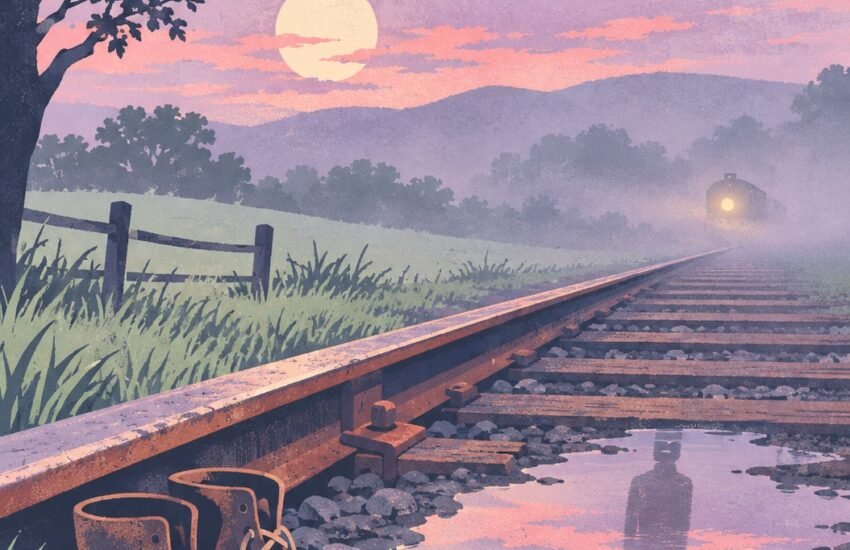
In the morning she traveled alone. The journey was long and uncomfortable, with a change at a station that seemed built for the use of sheep rather than passengers. When she arrived at Meresby, no one asked for the return half of her ticket. She put it in her purse.
Joseph Wright, the parish clerk, was a stout man with a round face and a limp on the left side. Mrs. Claughton knew him at once from George Howard’s description, and Wright’s face lost some of its color when she mentioned the man’s name. He gave her a room and, after Sunday service, led her to the vestry where the registers were kept.
She found the marriage of Charles Howard and Anne Francis in 1868, and the baptism of their daughter two years later. The dates matched her notebook. Wright stood behind her, reading over her shoulder. “I knew George Howard,” he said quietly. “You have described him exactly as he was.”
He did not ask how she knew. He only asked what she needed.
“I must spend part of the night alone in the church,” she said.
The curate was not unkind, but he was firm. “It is cold and dark, and you are a lady alone.”
“I am a widow,” Mrs. Claughton said, “and I have come five hours by train. I did not come here to be reasonable.”
At one o’clock Wright walked her through the dark village and unlocked the church door. He gave her no light. “I will return at a quarter to two,” he said, and locked the door behind her.
The church was dark and cold. Mrs. Claughton stood beside the grave of Richard Harte at the south-west corner of the south aisle, listening to her own breathing. The stone floor was uneven under her feet.
At approximately twenty minutes past one, the lady in the white shawl appeared a few yards away. George Howard stood beside her, and behind them was Charles. This time his hands hung at his sides and his face was uncovered. He looked younger than his father, and tired, but no longer ashamed.
Charles pointed toward the wall near the memorial. “The stone there is loose,” he said.
Mrs. Claughton knelt and pressed the stones with her fingers. One shifted. She worked it free and reached into the recess behind. Her hand closed on a small packet wrapped in oilcloth. She drew it out.
“I hid those papers when I lost the courage to present my wife and child to my family,” Charles said. “Give them to my surviving sister. Her name is Eleanor Howard, and she lives at Harford House. Then find Mr. Francis, who raised the girl. The papers will tell you where he is. Tell my sister that our father used to call her Nell, and that she once broke a china dog on the stair rail and blamed the cat. She will know it is true.”
The lady in the white shawl walked to a nearby grave and bent down. When she straightened, she held a white rose. She carried it to Mrs. Claughton and placed it beside the packet on the stone floor. Then the three figures were gone.
Mrs. Claughton gathered the packet and the rose. At a quarter to two, the key turned in the lock. Wright opened the door and found her standing just inside, dry-eyed and steady, with the oilcloth packet in one hand and the white rose in the other.
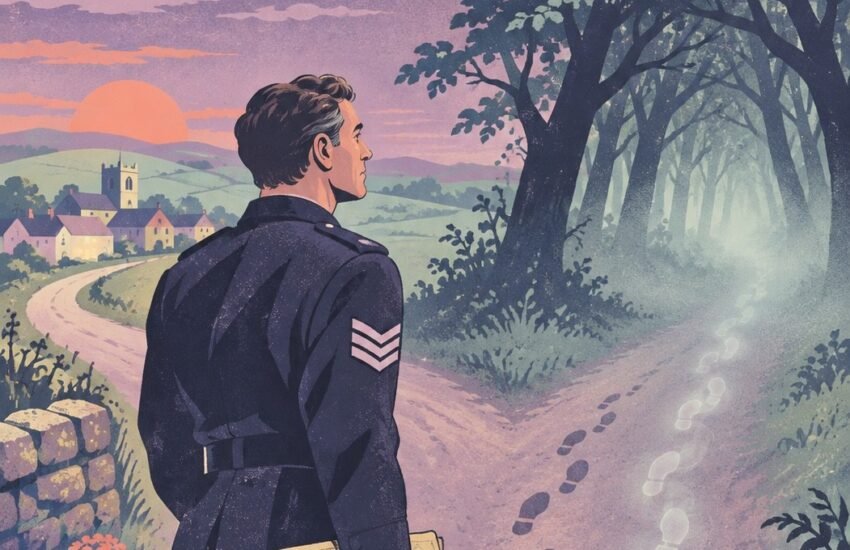
On Monday morning Mrs. Claughton traveled to Harford House. The woman who came into the morning room was older, with gray hair and a strong face, but the resemblance to George Howard was so sharp that Mrs. Claughton almost spoke his name.
Eleanor Howard did not ask her to sit. “I understand you have something to tell me,” she said.
“I have something to show you,” Mrs. Claughton said. She described George, Charles, and the lady in the white shawl. She gave the dates from her notebook. Then she opened the oilcloth packet and laid the contents on the table: the marriage certificate of Charles Howard and Anne Francis, a bundle of letters in Charles’s hand, and a written acknowledgment of their daughter.
Eleanor read the first page and went pale. She lifted one of the letters and stared at the handwriting. “That is Charles,” she said. “And the china dog—no one but Charles and I knew about the china dog.” She sat down heavily.
She had known of Charles’s attachment to Anne Francis, she said, but had believed it ended before his death. She had never known of a marriage or a child.
Mrs. Claughton told her of the dream and the need to find Mr. Francis. It took several days, but the information in the packet made the search short. They found the young woman raised as a Francis, and the Howard family acknowledged her. They restored the money and position denied to her, and they cleared Anne Francis’s name.
Before leaving, Mrs. Claughton sent Dr. Ferrier the unused half-ticket and the white rose, with a note that the task was complete.
She returned to the house in Blake Street after a few weeks. On the first night back, she sat in her room with the children asleep. The landing clock struck half-past one. The sound faded into the house. No footsteps climbed the stairs. No furniture moved overhead. No water appeared where it should not be. The stairs and the landing lay still under the clock, and the house asked nothing more.
This story is based on a true account included in Andrew Lang’s The Book of Dreams and Ghosts. You can read the original account in the free Project Gutenberg edition. And if you are interested in fresh and modern content about dreams that came true, you can find them in my book “Dreams That Wake You Up”, a collection of real dreams and real outcomes, directly from my clients, printed with their consent.
For more articles and stories from us, click here to go back to the Hub Page