Fairy Tales: Mary’s Child
Click here to go back to the Fairy Tale Page and discover more articles like this one
I remember that, when I was a child, I never really liked this story. I thought it was kind of stupid, and I always asked my grandma to skip it.
I think I understand why now. I didn’t like the way the girl was punished for doing something that could very easily have been me. I also thought the story was rather uninteresting. Perhaps because I didn’t want to learn the lesson it was trying to teach me.
Rediscovering it as an adult, however, I was fascinated. There is so much to unpack here. While I was thinking about what to take from the story, what to leave behind, and how to turn it into an oracle card, I could see almost the entire Major Arcana flashing before my eyes. And if I were a high school student again, this is the fairy tale I would choose for my school project. There is simply so much inside it once you begin looking.
I spent quite some time thinking about the introduction for this one, and eventually came to the conclusion that I would rather invite you to read the tale first. Then, once we are both on the same page, we can discover everything hidden inside it together.
I know that, with the previous two stories, I told you that you could skip the tale and jump straight to the oracle meaning if you wanted to. So please trust me when I tell you that, this time, you really should not skip it. You will be missing out on something great if you scroll past it.
Instead of chewing your ear off with a lengthy introduction, I’ll let you read the story in peace now. I can chew your ear off afterward. Okay? Please, I’m serious. Do not skip this one. Trust me for once.
Mary’s Child
At the edge of a great forest lived a woodcutter and his wife. They had only one child, a three-year-old girl, yet the family was so poor that they did not have enough to eat every day, and often had no idea what to feed the little one.
One morning, heavy with worry, the woodcutter headed out into the woods and set to work. As he was chopping wood, a beautiful woman suddenly appeared before him, wearing a crown of shining stars upon her head. “I am the Virgin Mary, mother of the Christ child,” she said. “You are poor and in need. Bring me your daughter; I will take her with me, be a mother to her, and care for her.”
The woodcutter obeyed, fetched his little girl, placed her in the Virgin Mary’s care, and she carried her up into heaven.
There, the child had a wonderful life. She ate sweet bread and drank sweet milk, wore clothes spun of gold, and played with the angels.
When she turned fourteen, the Virgin Mary called her over and said, “Dear child, I have a long journey ahead of me. Here, take the keys to the thirteen doors of the kingdom of heaven and keep them safe for me. You may open twelve of them and behold the glories inside, but the thirteenth—the one that fits this little key—is forbidden to you. Take care not to unlock it, or great unhappiness will befall you.”
The girl promised to obey.
Once the Virgin Mary had departed, the girl began exploring the chambers of heaven. Each day she unlocked one door, until twelve days had passed and she had opened twelve little doors. Behind each sat an apostle bathed in radiant light, and the girl marveled at all the splendor and glory, while the angels who always kept her company rejoiced right alongside her.
On the thirteenth day, only the forbidden door remained. A fierce curiosity seized the girl to know what lay behind it. “I won’t open the door all the way, and I won’t step inside,” she told the angels, “but I’d love to unlock it and peek through the crack.”
“Oh, no!” cried the angels. “That would be a sin. The Virgin Mary forbade it, and it would bring about your ruin if you did.”
The girl fell silent, yet the desire in her heart would not quiet down. Rather, it gnawed and pecked at her relentlessly, giving her no rest.
At last, once all the angels had stepped out, she thought, Now I’m all alone and could sneak a quick look inside. Nobody will ever know.
She fished out the key, and the moment it was in her hand, she slipped it into the lock and turned it. The door sprang open. There before her sat the Holy Trinity amidst fire and dazzling radiance.
She stood frozen for a moment, gazing in wonder at the sight. Then, ever so lightly, she touched the brilliance with her fingertip, and her finger turned solid gold.
Suddenly, a wave of terror washed over her, refusing to let go. She slammed the door shut and ran away.
The fear never left her. No matter what she did, or how hard she tried to distract and calm herself, dread remained her constant companion. Her heart hammered wildly and would not slow down, and the gold on her finger refused to come off, no matter how vigorously she scrubbed and washed it.
Before long, the Virgin Mary returned from her journey. She summoned the girl and asked for the keys of heaven back. As the girl handed over the ring of keys, the Virgin looked deep into her eyes and asked, “You didn’t open the thirteenth door, did you?”
“No,” answered the girl.
The Virgin Mary laid a hand over the girl’s heart and felt how wildly it was beating. At once, she knew the girl had disobeyed her and unlocked the thirteenth door. “Are you quite certain you didn’t do it?” she asked again.
“No,” the girl answered a second time.
Then the Virgin Mary caught sight of the golden finger and knew the girl had sinned. For a third time, she asked, “Did you truly not do it?”
“No,” said the girl a third time.
“You have disobeyed me,” the Virgin Mary declared, “and worse still, you have lied. You are no longer worthy to remain in heaven.”
A deep sleep overcame the girl, and when she awoke, she was lying far below on the earth, stranded in the middle of a wilderness. She tried to cry out, but not a single sound passed her lips. She scrambled to her feet to run away, yet whichever way she turned, dense walls of thorny brambles blocked her path, impossible to break through.
In this dark forest where the girl was trapped stood a hollow tree, which now had to serve as her home. Whenever night fell, she crawled inside to sleep, and when rain and storms raged, she sheltered within its trunk. Still, it was a wretched existence, and whenever she remembered how lovely heaven had been and how sweetly the angels had played with her, she wept bitterly. She lived on roots and berries, for there was nothing better to be found. In the autumn, she gathered fallen nuts and leaves and carried them into her hollow. Those nuts were all she had to eat through the winter, and once snow and ice arrived, she had to burrow beneath the leaves like a poor wild creature to keep from freezing. Before long, her clothes had worn to shreds and fallen from her body in tatters.
As soon as the sun grew warm again, she would step outside and sit in front of her tree, her long hair cascading around her like a cloak. Year after year she sat there, tasting the sorrow and misery of the world.
One spring day, when the trees were dressed once more in fresh green, the king of the land was hunting in the forest in pursuit of a roe deer. The deer fled into the dense thicket surrounding the clearing where the girl lived, so the king dismounted, tore apart the tangled brush, and hacked a path through with his sword. Breaking into the clearing, he spotted the breathtaking maiden sitting beneath the tree, veiled from head to toe in her golden hair.
The king stood transfixed, staring at her in amazement. Finally, he spoke: “Who are you? And why are you sitting out here in this lonely place?”
The maiden gave no answer, for the Virgin Mary had stripped her of the power of speech.
“Will you come with me to my castle?” the king asked.
At that, the maiden gave a small nod.
The king lifted her into his arms, carried her to his horse, and rode home with her. Once at the royal castle, he had her dressed in fine garments and provided her with everything in abundance. Even though she could not speak, she was so lovely and graceful that the king fell deeply in love with her, and before long, they were married.
About a year later, the queen gave birth to a son. That very night, the Virgin Mary appeared at her bedside. “Will you tell the truth and confess that you unlocked the forbidden door?” she asked. “If you do, I will restore your voice. Yet if you cling to your sin and persist in your lie, I will take your newborn child away with me.”
The queen was given the power to answer, yet she remained silent, and so the Virgin Mary lifted the newborn from her arms and vanished with him.
The next morning, when the child was nowhere to be found, whispers spread among the people that the queen was a cannibal who had devoured her own baby. The queen heard every word, helpless to defend herself, though the king refused to believe a bit of it because he loved her so dearly.
A year later, the queen bore another son. That night, the Virgin Mary appeared to her once more. “Confess that you opened the forbidden door,” she said, “and I will return both your child and your voice. Persist in your sin and deny it, and I will take this newborn as well.”
This time, the queen replied, “No, I did not open the forbidden door.”
At that, the Virgin Mary took the second child from her arms and carried him away to heaven.
The following morning, when the baby had vanished just like the first, the people cried openly that the queen had eaten him, and the king’s councilors demanded that she be put on trial. Still, the king loved her too much to give credit to the rumors, and he forbade his councilors, on pain of death, from ever speaking of it again.
The next year, the queen gave birth to a lovely baby girl. That night, the Virgin Mary appeared a third time. “Follow me,” she said, taking the queen by the hand and leading her up into heaven. There she showed her the two older boys, laughing and playing happily with the orb of the world.
Seeing the joy in the queen’s face, the Virgin Mary asked, “Has your heart still not softened? Admit that you opened the forbidden door, and I will give you back your two sons.”
Once again, the queen answered, “No, I did not open the forbidden door.”
With that, the Virgin let her sink back down to earth and took the third child from her as well.
When news broke the next morning that the third child had also disappeared, the people shouted in outrage, “The queen is a cannibal! She must be condemned!”
This time, the king could no longer hold his councilors back. The queen was brought to trial, and because she could neither answer the charges nor defend herself, she was sentenced to burn at the stake. Wood was piled high, and as the queen stood bound to the post with flames beginning to lick around her, the hard ice of her pride finally melted, and her heart was pierced with remorse. If only I could confess before I die that I opened that door, she thought. At that very instant, her voice returned, and she cried aloud, “Yes, Mary, I did it!”
Immediately, rain poured down from the heavens, extinguishing the roaring flames, and a brilliant light broke through above the queen. The Virgin Mary descended, flanked by the two young sons and cradling the newborn daughter in her arms.
“Whoever repents of their sin and confesses it is forgiven,” the Holy Virgin said gently. She placed the three children into the queen’s arms, restored her voice forever, and blessed her with happiness for the rest of her days.
About Mary’s Child
First of all, this one has a happy ending. You didn’t believe that was possible, did you? Me neither. Until the very last sentence, I thought the girl was going to die. So let’s take a moment to breathe.
Okay, enough breathing for now, let’s start unpacking. We begin with the father. He is so poor that he cannot feed his family every day, and they regularly go hungry. When a beautiful lady wearing an expensive crown appears and promises to care for his child, he does not think twice. As an adult, I find this incredibly sad, because it reminds me of desperately poor parents who entrust their children to strangers promising them a better life abroad, only for those children to be trafficked and sexually exploited in Europe. Oh, this part kills me. Luckily, this particular father really does place his daughter in good hands, but we should not conclude that this is what usually happens in real life. As the story continues, we also learn that he and his wife never see their daughter again. Funny enough, she never asks about her parents either. Ungrateful little brat. At the very least, once she became queen, she could have started looking for them and send them some money.
The next thing we need to discuss is the thirteen doors. Imagine that you are a child and your parents receive thirteen packages in the mail. They tell you that you may open twelve of them but absolutely must not open the last one—and then they leave. What are you going to do? Especially after opening the first twelve and discovering that they all contain wonderful presents? Of course you are going to open the last one. And if that final package contains your parents’ sex toys, and you discover them, slam the box shut in horror, wish you could puke your own eyes out, and realize that you will never be able to look your parents in the eye again—and then your parents come home and ask whether you opened that package—you are going to say no. If they become suspicious because the tape you reattached does not look quite like it did before and ask you again, you are going to say no again. Okay, I made up this example because I asked myself, “What is the worst thing that could be inside, and why would your parents allow you to open twelve packages but not the last one?” Thankfully, this did not happen to me as a child. I imagine that particular scenario would be rather traumatizing. But I think most of us can relate, and most of us—as children, and perhaps even as adults—would have done exactly the same thing. The fact that it is obvious to most of us that we would have opened the thirteenth door ourselves is what makes this tale a little mean, and it is why I hated it so much as a child. I hope you know where I’m coming from now.
The next thing we learn is that this girl falls and rises over and over again. She begins at the bottom as the daughter of a poor woodcutter whose family has nothing to eat. Then she is adopted by a rich lady and suddenly has everything, only to lose it all again. Then the king arrives, marries her, and makes her a queen. Once again, she is on top. This is the Wheel of Fortune: life happens in seasons, and when you hit rock bottom, you can trust that the wheel will eventually turn again. But there is more to it than that. Her first position at the bottom is undeserved, and her first rise is unearned. Her fall, however, is the consequence of her own questionable actions, which carries strong Justice energy. Once she has finally suffered enough, she unexpectedly receives another chance—again, without having earned it—only to be tested all over again. AHHHH! Do you see what is happening here? This is so deep. And once you have reached a certain age and lived through a few seasons yourself, it really hits home. I’m almost forty, and my life has been one hell of a ride, with some incredibly good and some incredibly fucking bad times, so at this point, it certainly hits home for me. Imagine a modern version: someone grows up in a poor family, marries a rich man, screws everything up, loses it all, hits rock bottom, and then marries a second rich husband a few years later. Not that this is my life story—it is only an example—but it feels remarkably realistic.
The Virgin Mary’s methods and her draconian punishment are an entire subject in themselves, and you may come to your own conclusion about whether her actions were justified or whether, just maybe, she went a little too far. On the one hand, she did not ask for much. Telling the truth should be a small thing to do—although we all know that, when it comes to certain truths, it can also be a loooooot to ask for. There is also the question of motive: the girl does not really have a reason to keep the truth hidden. But imagine being tortured and ordered to accuse someone you love. Even if the accusation were true, keeping your mouth shut could feel like an act of great loyalty. Of course, that is not what this story is about, but taking someone’s child away to force a confession is the kind of method you would expect from an authoritarian secret service. That is where the comparison comes from, before you ask. From this perspective, the story raises questions about obedience and the abuse of power. Or perhaps that interpretation is far-fetched, and we should stay with the simpler reading: the Virgin Mary asks for something small and easy, yet the girl is so proud that she is willing to endure a wildly disproportionate punishment rather than admit what she did. Mary also gives her chance after chance, and every single time, she completely screws it up.
And then there is the king, who falls in love with his beautiful, submissive wife who cannot speak. Now, I know a lot of men will say, “I wish my woman would talk less too.” Shame on you, guys. Shame on you. But how the hell can this woman be too proud to tell the truth when she has so much to gain, while at the same time remaining in a relationship where she can never speak at all? Perhaps the king loves her so deeply and cares for her so well that she never feels the need to say anything. Still, this part raises a lot of questions too.
Then we arrive at one of the more obvious messages near the end: people will judge you and assume the worst, even before they have considered any other explanation. Apparently, three missing babies are enough to declare someone a cannibal without conducting much of an investigation.
And forgiveness, obviously.
I am sure that if you read the tale a second or third time, you will discover even more things hidden inside it. You will find your own meanings, your own reflections, and situations from your own life to which you can apply them.
Isn’t it beautiful? And rich? And amazing? Did I promise you too much?
Now that we have enjoyed this tale together, and you have finally allowed me to chew your ear off with all my very obvious thoughts, let’s move on to the part where we turn it into an oracle card.
What does Mary’s Child mean as an Oracle Card?
The story has so many layers that I could not possibly squeeze all of them into a single oracle-card meaning. So I decided to choose one central meaning for each side of the card.
For the upright meaning, I chose the most obvious lesson: it is not always the original mistake that destroys your life. Sometimes it is your decision to continue with it, to follow it through, cling to it, and defend it long after doing so has become completely unnecessary. It is not the decision itself that destroys your life, but the fact that you choose it again and again finally turns it into a life sentence.
Perhaps you once decided to work in an office, only to discover that you absolutely hate office work. But you are too proud to admit that what you really want is to sell wedding dresses, so you remain in the office and continue being unhappy.
Perhaps you stay in a miserable marriage because you once promised yourself that you would never get divorced.
Or perhaps you continue living in London because, a long time ago, you told everyone that London was your dream. Now your overpriced apartment is tiny, everything is dirty, the air smells of pollution, and you can barely afford bread. You have not made any friends either, because you still have no fucking idea how to make friends in a city where you cannot seem to find a place in which people actually talk to people they do not already know. At some point, staying in London becomes a wildly disproportionate punishment compared with simply admitting that you were wrong and returning to your small village in Baden-Württemberg. There, you could live happily ever after in an attic apartment in a half-timbered house and eat Sauerkraut with Klopse seven days a week for very little money.
The mistake was not moving to London. The mistake was deciding that, because you once called it your dream, you now have to remain there forever.
For the reversed meaning, I wanted to choose something that does not place the blame on the person drawing the card. Upright already asks whether you are prolonging your own suffering because you are too proud to admit that an earlier decision was wrong. Reversed, I think we need to look at the other side of the story: What if someone else is creating the suffering because they want you to submit?
At first, the Virgin Mary’s request seems almost ridiculously small. She is not asking the girl to sacrifice her life, give away everything she owns, or complete twelve impossible labors. She only wants her to admit that she opened the door.
Just tell the truth. Three little words: I did it.
But is a request still small when someone threatens to punish you until you obey?
That is the important point here: we should not judge a demand only by how small it appears. We should ask why it is being made, what happens if we refuse, and whether the person making it is entitled to demand it at all.
“Just admit it.”
“Just give me your password.”
“Just let me check your phone.”
“Just do this one unpaid task.”
“Just apologize, even though you did nothing wrong.”
“Just prove that you love me.”
None of these requests necessarily sounds enormous on its own. Some of them may even be perfectly reasonable in the right situation. But add a threat, and the meaning changes.
Do this, or I will punish you.
Do this, or I will leave you.
Do this, or I will humiliate you.
Do this, or I will take something you love.
Do this, or I will continue making your life unbearable until you finally give me what I want.
At that point, we are no longer talking about a small favor. We are talking about submission.
And yes, the girl lied. She opened the door after being explicitly forbidden to do so, and then denied it despite the golden evidence shining on her finger. We have already discussed that part. But the Virgin Mary is also the more powerful person in this relationship by every imaginable measure. She can cast the girl out of heaven, take away her voice, remove her children, return them whenever she pleases, and allow her to be accused of something horrific without giving her any way to defend herself.
All of that to obtain one confession.
You may decide that Mary was justified. The story certainly wants us to believe that she was. She gives the girl chance after chance, and all the girl has to do is tell the truth.
But the oracle card does not have to ignore the methods simply because the original tale approves of them.
Reversed, Mary’s Child can appear when someone is presenting their demand as tiny, harmless, or perfectly reasonable while attaching a completely unreasonable consequence to your refusal. The real purpose of the request may not be the thing itself. They may be testing whether they can make you obey.
And once you obey the first time, there may be another small request waiting behind the next door.
If someone wants a harmless favor, you are allowed to ask why they need it. You are allowed to say no. You are allowed to notice how they react when you refuse. Most importantly, you are allowed to take a threat seriously even when the demand attached to it looks insignificant.
So perhaps that is the reversed message:
Do not measure the size of the request. Measure the threat attached to it.
If the real purpose is to frighten you, control you, or teach you to submit, recognize the situation for what it is. Leave if you safely can. If you cannot leave immediately, seek support and begin creating distance.
Because a small act of obedience can become the entrance fee to a much larger system of control.
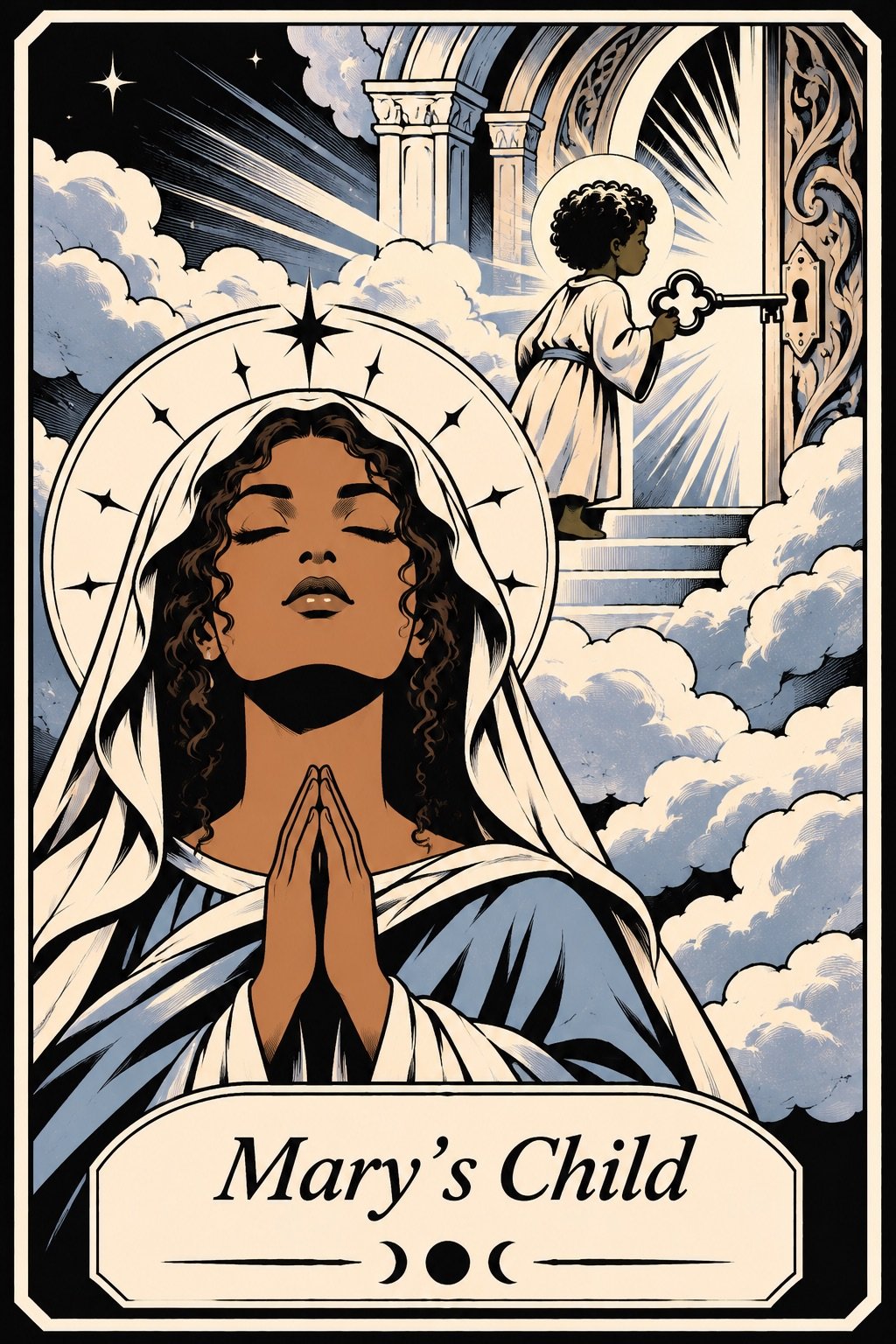
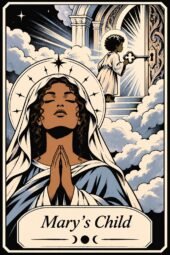
Mary’s Child
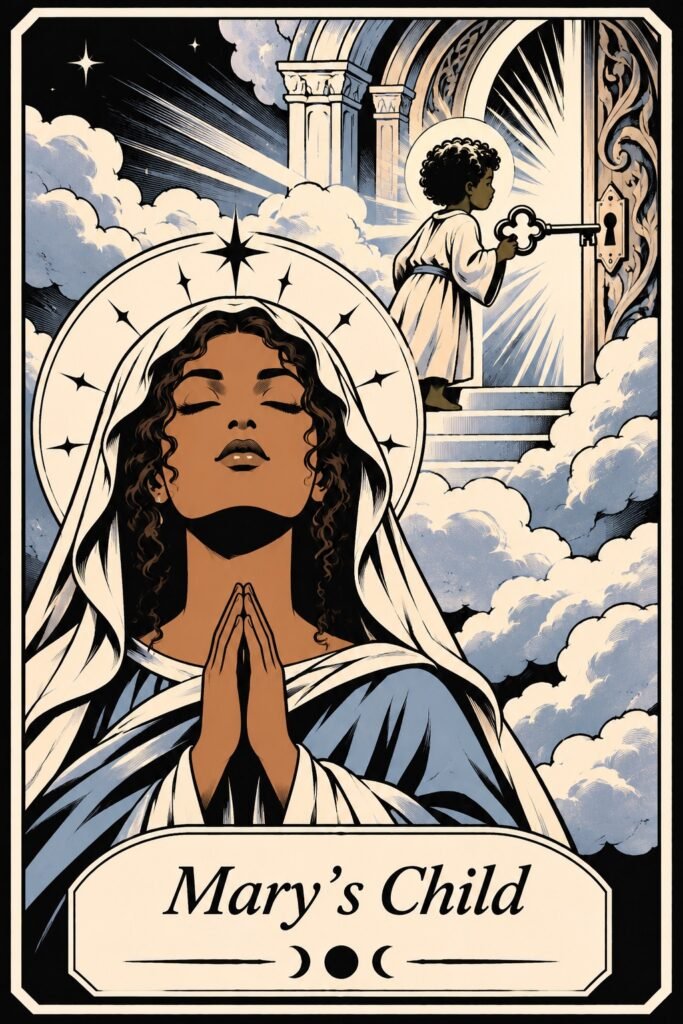
Upright: Course correction · Admitting a mistake · Reclaiming your path · Ending unnecessary suffering · Truth and liberation
Reversed: Coercion · Conditional love · Threats disguised as requests · Abuse of power · Protecting your autonomy
Upright Meaning
A mistake does not have to become your destiny.
Mary’s Child appears when an old decision has begun to feel like a life sentence. You may be continuing along a path that no longer makes you happy simply because you once chose it, defended it, or told everyone that it was what you wanted.
Perhaps you remain in a career that drains you, a relationship that has reached its natural end, or a place that has never truly felt like home. Changing direction may now feel embarrassing. You may fear having to explain yourself, disappoint other people, or admit that the future you once imagined is not the life you want anymore.
But the original choice is not what keeps you trapped. It is the belief that changing your mind would mean that you failed.
This card asks you to lay down your pride and tell yourself the truth. You are allowed to outgrow a dream. You are allowed to discover that a decision was wrong for you. You are allowed to leave behind a path that looked beautiful from a distance but became unbearable once you had to live upon it.
The wheel is always turning. Confession, honesty, and course correction allow it to turn again. What has been lost may not return in exactly the same form, but your voice, freedom, and hope can be restored.
You do not need to keep punishing yourself for having been wrong. Admit what no longer works, forgive the person you were when you chose it, and choose again.
Message: The mistake was not choosing the wrong path. The mistake would be believing that you must remain on it forever.
Reversed Meaning
Do not measure the size of the request. Measure the threat attached to it.
Reversed, Mary’s Child warns of coercion disguised as something small, reasonable, or harmless. Someone may insist that all you need to do is comply, confess, apologize, surrender your privacy, or prove your loyalty. They may make your refusal seem irrational while ignoring the fact that they have attached punishment, humiliation, abandonment, or fear to it.
A small request does not remain small when it is used to test your submission.
Pay close attention to what happens when you say no. Does the other person respect your boundary, or do they increase the pressure? Do they listen to your reasons, or do they threaten to withdraw love, security, approval, or something else you value? Are they trying to resolve a genuine problem, or do they establish that they have the power to make you obey?
This card can appear in controlling relationships, families, workplaces, spiritual communities, or any situation in which one person holds power over another. It asks you to distinguish accountability from domination. Honest accountability allows room for dignity, context, and repair. Coercion demands surrender and calls it love, loyalty, forgiveness, or obedience.
You are allowed to question a demand even when complying would be easier. You are allowed to protect your privacy and autonomy. You are allowed to recognize that someone’s methods reveal more than their words.
If it is safe to do so, create distance. Seek support from someone you trust, especially if refusing the demand could place you in danger. You do not have to face a powerful or controlling person alone.
Message: A small act of obedience can become the entrance fee to a much larger system of control. Your right to say no does not disappear simply because someone else dislikes your answer.
Fairy Tale Oracle
Draw a card for free!
Click here to go back to the Fairy Tale Page and discover more articles like this one