
About Me – The Woman Behind The Words
When I was a teenager, my mother insisted I go to business school — the kind of place where numbers matter more than dreams, and creativity wasn’t exactly on the schedule. I missed being creative terribly. Luckily, I wasn’t the only one.
There was one other girl in class who felt the same way. She was always sketching, drawing, filling the margins of her notes with beautiful things. I wasn’t much of an artist — not the way she was — but I had a head full of imaginary worlds and stories that wanted out. So we teamed up. Pushed each other. And one of us — I honestly can’t remember who — started digging around the internet, looking for open calls for short story anthologies.
I started writing. Real stories. Finished ones. The kind you submit with trembling hands and too much hope. And somehow, one of mine made it in.
I was just 17 when I first saw my words in print. It wasn’t a big deal — no money, no fame. The publisher was a small passion project, print-on-demand, and it vanished not long after. But at the time, to me, it was huge. It was everything.
Holding that book in my hands felt like proof. That my stories mattered. That I could actually do this. And it lit a fire in me that still hasn’t gone out.
When Writing Paid The Rent (Partially)
After my first publication, I wanted more.
So I wrote more stories. A lot more. I submitted to every short story contest I could find online. But after twenty or twenty-five rejections, my friend and I came to the same conclusion: it must have been a one-time thing. A lucky strike.
Maybe I wasn’t a natural. Maybe I wasn’t the gifted one. Maybe — just maybe — I had to learn this like everyone else.
So I stopped submitting and started studying. I ordered at least a dozen books on creative writing and worked through them all. I subscribed to every newsletter I could find — not TikTok threads or YouTube reels, but real mid-2000’s-style text-only newsletters. And they didn’t talk about self-publishing back then. That wasn’t a thing yet. But they did warn about vanity publishers and teach the traditional path: how to pitch agents, how contracts worked, how to break into the market — and how to make a little money if you were good enough.
One option was clear: women’s magazines.
I was 19 when I took that route. Not glamorous, not personal, and definitely not with my name on it — but one of the newsletters said it was a solid way for semi-professionals to earn a few hundred bucks on the side if you got accepted by one of the agents who specialized in this kind of thing.
To my own surprise, I did.
And that changed everything.
Suddenly, I wasn’t just the broke girl working an office job at minimum wage. I had extra money — $400 to $600 per month from my stories. That was enough to escape the shared apartment where my roommates took my sleep, my coffee, and my toilet paper, and move into my very own place.
It wasn’t fancy. But it had two rooms. And a bathroom that was mine alone.
That felt massive.
That felt like being a real adult. Not an adult-in-training. Not someone waiting for permission. A grown woman with a key to her own door and just enough money to stand on her own two feet.
And writing — again — had given me something that nothing else at the time could.
The Big Break That Broke Me
Two years later, my agent thought it was time for me to take the leap.
He believed in me.
At 21, he gave me a chance most young writers only dreamed of: writing a dime novel.
Hell yes.
The math looked good. If I wrote one dime novel every three weeks, I’d match my office income. Two a month, and I’d be better off than most people my age. I’d already climbed the corporate ladder from coffee girl and phone answerer to spreadsheet updater and back-office support. But the work still bored me to tears — and it was still underpaid.
So yes. I wanted that dime novel. I needed it.
My agent gave me six weeks to write the first one — more than usual. A kindness. I received everything I needed: the last few issues to study, a storyline to follow, a requirement sheet to guide me. The groundwork was laid. All I had to do was write.
But I couldn’t.
Six weeks went by, and I had only 50 pages instead of the required 160.
I was frozen.
I wasn’t just stuck — I was ashamed. And instead of facing it, instead of owning it, I went quiet. I didn’t call. I didn’t email. I didn’t even warn my agent when I saw the deadline slipping away.
I stayed silent until he wrote me first, asking where the manuscript was.
By then it was too late.
He was disappointed. And I don’t blame him. I lost the contract. And with it, the one thing that had kept me afloat: the extra money that let me live like a real adult instead of an exhausted kid on minimum wage.
It wasn’t just the opportunity that slipped through my fingers — it was my entire self-image.
The girl who had once felt grown, capable, and professional… suddenly felt like a fraud.
I don’t tell this story lightly. For a long time, I couldn’t tell it at all. The shame was real. Heavy. But it’s far enough in the past now that I can see it clearly for what it was: a young writer, overwhelmed, afraid to disappoint, hoping talent would carry her through without structure or support.
And I don’t hide it anymore — because when I was young and overwhelmed, I wished more adults had told their stories of epic failure. Not the polished ones. The real ones. The ones where things went wrong and they didn’t magically fix them — they just lived through it and grew.
This was mine.
Luckily, Nobody Knew My Name
Looking back now, one thing worked in my favor: I had kept a low profile. No public author pages. No excited Facebook announcement. No traceable name in the dime novel credits. My shame stayed private.
At the time, though, I wasn’t laughing.
I avoided anyone who might know my agent. I stayed quiet. But deep down, I didn’t want to give up. Not completely. I just didn’t know how to keep going. I had touched a dream, fumbled it, and now needed something—anything—that wouldn’t make me flinch every time I opened a Word document.
So I told my friends the contract had ended because of the economy. “Demand’s just down,” I said. “Nothing personal.”
It was a lie, of course. But it gave me cover while I searched for something else. Some other way to make the extra money I relied on so badly.
And then I found it.
Editing.
I wasn’t just decent — I was good. Fast as lightning. Plot holes glared at me like neon signs. Typos stood no chance. Editing was easier on the nerves, easier on the ego, and best of all: it paid. Not well, not dime-novel-level well, but enough to help. And for a while, that was enough.
Until suddenly, out of nowhere…
Something shifted.
Demand exploded. Not just grew — skyrocketed.
A whole new publishing world had arrived. And with it, a new era of opportunity.
Self-publishing had emerged.
The Indie Author Years (and What I Regret)
When self-publishing took off, I decided to hop on the train.
I wasn’t one of the first on board — in fact, I had already edited books for some of those early pioneers — but eventually, I knew it was my turn. I had to prove to myself that I could finish a novel. Not just think about it, not just dream about it — do it.
So I wrote one. Then two. Then three. Then four. Then a full trilogy.
Sci-fi. Space opera. Alien cheese and all.
And you know what? I was proud of it.
But I made a choice — a mistake, maybe — because I had the right gut feeling.
I didn’t trust Amazon.
Even back then, I could see it coming. The shift. The squeeze.
First, you pay to publish and market your book — to get seen. Then, if you’re lucky enough to sell, they take a hefty cut from what’s left. It feels like double-taxation. I saw it coming and I didn’t want to play that game.
So I refused to go exclusive with Kindle Unlimited. I used a distributor and sold to every ebook store that welcomed indies. And for a while, it worked. I even made it into the Amazon Top 100 of my niche categories now and then. Not the general Amazon Top 100, sure — but they let me play. I made some money. I built something.
But not on the big scale.
Looking back, I have to admit: I missed the window. If I had played by their rules — just for a few years — maybe I’d have built a larger following before the algorithmic gates slammed shut. Maybe. It’s hard to say.
Anyway, we’re all in the same sinking boat now.
Today, I think I’m finally making the right decision — even if it’s one born from realism, not rebellion. I no longer sell on any external platform. I don’t give Amazon or anyone else a cut. I don’t rely on their algorithms or promos. I sell from my own store. My own website. There’s less reach — but also no one else draining my budget. And in this era, that’s already a win.
The Pause Button (and the Tiny Feet That Pressed It)
When my daughter was around three or four, I was still self-publishing.
Still writing. Still editing. Still trying to juggle it all.
But slowly, things shifted. The naps disappeared. Bedtime became a drawn-out process. The quiet windows I used to squeeze writing into — they started closing.
And every evening, after my daughter finally fell asleep, I found myself staring down the same choice: Do I tidy the apartment, finish the dishes, and fold the laundry — or do I write five, maybe ten, pages? Do I push through exhaustion just to get a scene done — or do I clear the hallway so I don’t step on Lego at midnight on my way to the bathroom?
I chose sanity. I chose the clean apartment. I chose sleep.
It wasn’t an easy decision. But it was a necessary one.
And so, for the first time in years, I stopped writing.
Not because I didn’t love it. But because I couldn’t give it the attention and energy it deserved — and I couldn’t give my family what they needed while doing both.
It was never meant to be forever. But it was, without question, the end of a chapter.
From Tarot Talks to Tarot Texts
My old books sold — until they didn’t.
At first, I assumed it was because I hadn’t published anything new in a while. I thought readers had simply moved on. What I didn’t realize back then was that the entire system had shifted. The indie gold rush was over. The gates had quietly closed. Pay-to-play had become the new normal.
When the royalty checks stopped coming, I stopped checking in. Quietly, I pulled my books from the distributor and moved on.
Years passed.
In 2020, I opened a spiritual business. Readings. Dream work. Tarot.
This time, it felt different. This time, I had no problem fitting the work around my family. And eventually — after years of showing up on YouTube, TikTok, and finally my own blog — something shifted again. I realized I had the time, the quiet, the discipline… and the fire to write again.
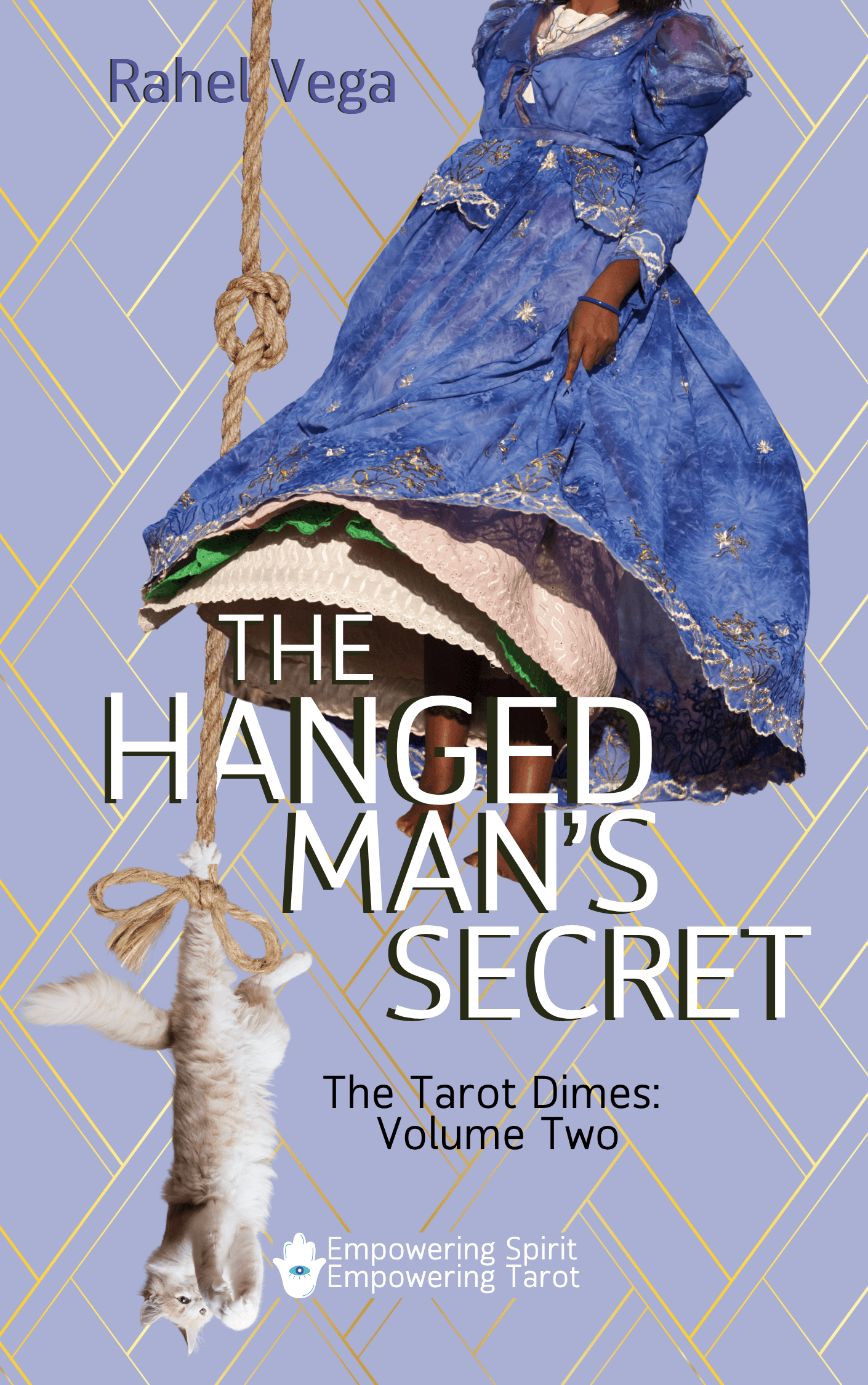
But not just anything. Instead of pushing myself to go live, to chase virality, or to become a content machine like so many others — I decided to use the hours I already spent promoting my work and redirect them into building something deeper. Not just social content. Something real. Something lasting. That’s when The Tarot Dimes began.
Tiny teachings. Big heart. And the return of my voice — on the page, where I’ve always belonged.