Summoned to the Afterlife by Mistake
The Strange Case of the Two Curmas
Click here to go back to the Hub Page
In the district outside Hippo there were two men named Curma, and this caused no end of small errors. Curma the farmer grew wheat and vegetables on a dry patch of land. Curma the smith hammered iron in a low workshop near the road. When someone asked for Curma, the answer depended on where the question was asked. Messages went astray. Accounts were mixed up. At market, the two men exchanged shrugs when a third person looked from one to the other. The practical farmer was not mystical. He said the confusion was an inconvenience, like a stone in a shoe. The smith, who was older and louder, said it kept life interesting.
One afternoon in the hot season, Curma the farmer was repairing a fence at the edge of his field. His wife called him toward the house for water. He straightened, walked a few steps, and dropped without a word. She ran to him. His breathing was shallow. His eyes were closed. She shouted for her son, and the boy came from behind the house. They shook Curma gently, then harder. They splashed water on his face. His chest rose and fell. But he did not answer. A neighbour arrived and stood in the doorway, wiping his hands. The wife sent the boy toward Hippo to find help.
While his body lay on the packed earth, Curma found himself elsewhere. The place was orderly and unfamiliar, though not frightening. People stood about in small groups, some of whom he knew from the district. A few were alive. A few were dead. He saw his own father, who had died years before, talking with a man from the next farm. Curma did not cry out. The air was quiet. He heard his name called, and he stepped forward without thinking.
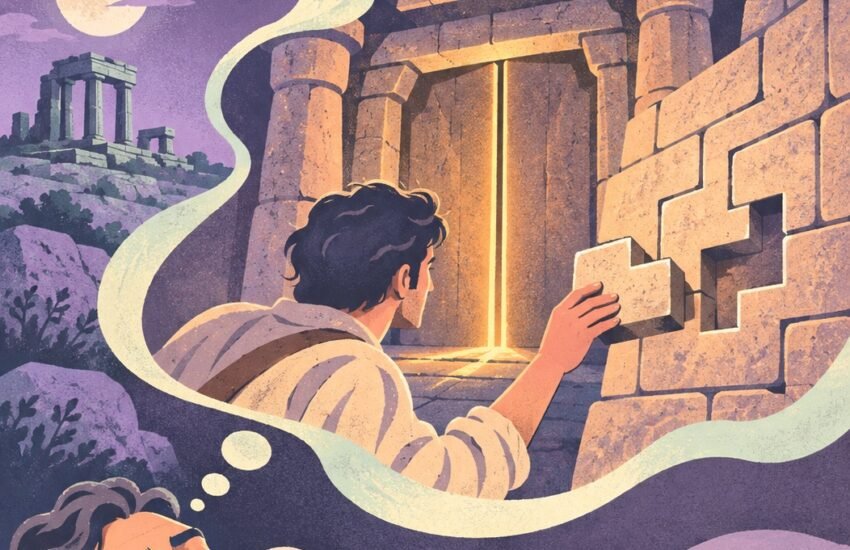
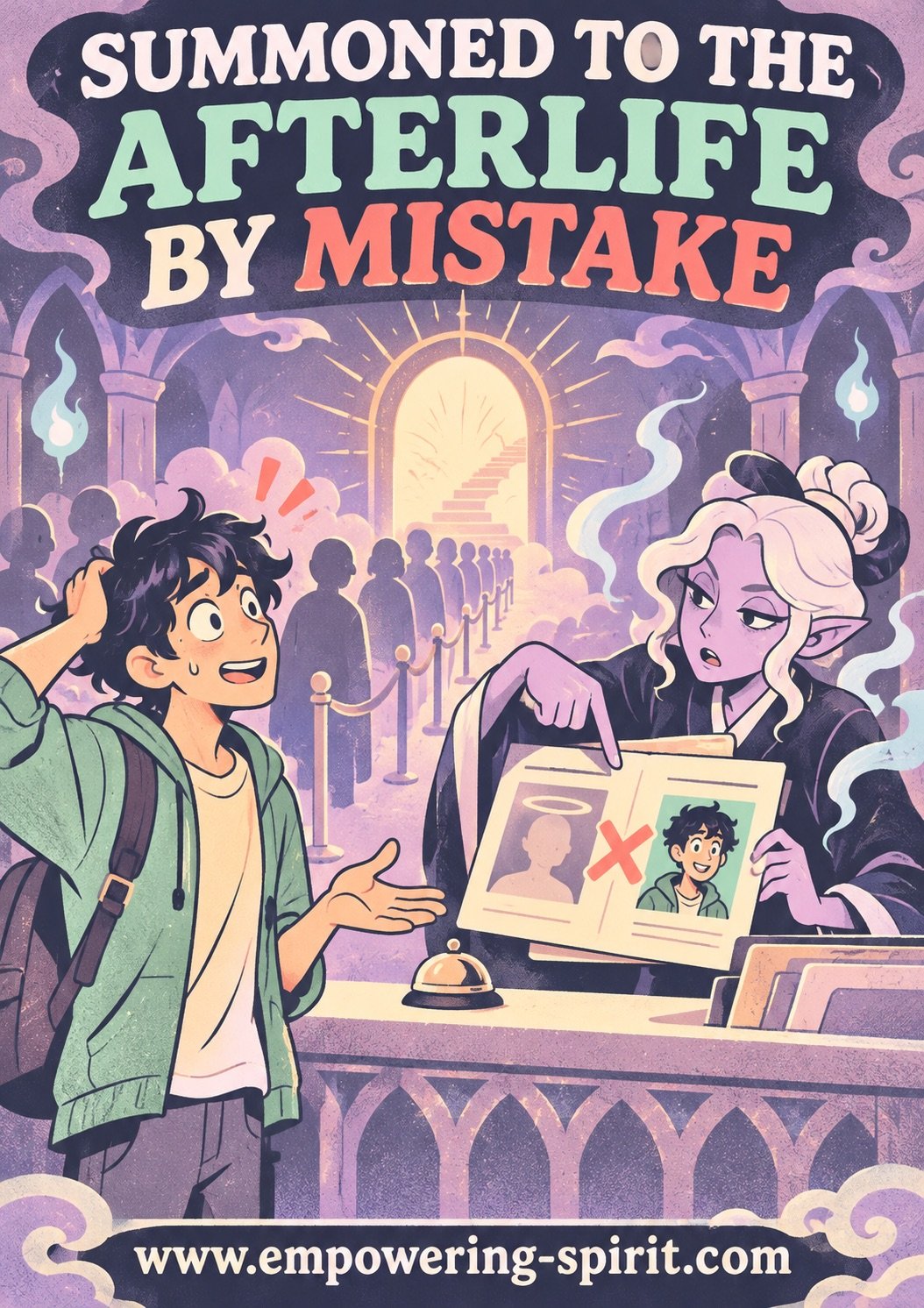
Two figures studied him as he approached. One looked at the other and shook his head. They had expected someone else. They did not want Curma the farmer. They wanted Curma the smith. The figures were not angry, only mildly surprised, the way a man is surprised when a neighbour returns the wrong donkey. Curma protested that people had confused the two men before, but never with consequences this serious. One figure told him to wait. It was then that Curma saw a man he recognized, though he had never met him: Augustine, bishop of Hippo. The bishop approached and baptised him with calm gestures. Afterward, Curma was led to a threshold. Beyond it the light was clear and the ground looked firm, and for a moment he thought he might be allowed to remain. But a voice told him he must return to the living and receive baptism. Curma objected that Augustine had already baptised him. The voice said, “You saw that in a vision. Go and be truly baptised.”

Curma opened his eyes. His wife was kneeling beside him, her hand on his chest. The neighbour stood over him. He heard voices, but he did not answer them. He said, “Go to Curma the smith. See what has happened.” His wife asked what he meant. The neighbour laughed from nerves and said he looked dead himself. But Curma repeated the order with such plain certainty that the neighbour turned and ran down the road toward the smith’s workshop.
The neighbour found the smith’s door open and the smith’s son weeping just inside. Curma the smith was dead. He had collapsed at his bench not long before. The neighbour stood still, then asked the time of death. The son said it had happened only moments earlier. The neighbour went back to the farm, walking quickly, and found Curma the farmer sitting up and drinking water. He told them the news. Curma showed no surprise. He said he already knew. The summons had been intended for the other man.
Curma told the story only once, slowly, while his family and two neighbours sat around the courtyard. He described the orderly place, the familiar faces, the call of his name. He told them the summons was for the smith, not for him. He described seeing Augustine, bishop of Hippo, and being baptised in a vision. And he repeated what the voice had said: he must return and be truly baptised. His wife asked if he was certain. He said he was not certain what the place was, but he was certain of the instruction. The neighbours who had seen him wake confirmed that he had asked about the smith before any news of the death arrived. The account did not change in the retelling.
Within a few days Curma the farmer walked to Hippo. He did not go as a visionary. He went as a man with a task. At the bishop’s church, he asked to see Augustine and explained his business without embellishment. When Augustine came into the room, Curma felt a small start of recognition, the way a man feels when he meets someone he has seen from a distance and now sees plainly. The bishop was older than the figure in the vision, but the face and posture were the same. Curma bowed his head.
Augustine listened with care. He asked practical questions. What did you see? What did you say when you woke? When did the blacksmith die? Curma answered each question in order. He said the figure who baptised him looked like the bishop. Augustine asked if he was certain. Curma said he was certain enough, but the figure had made a mistake by baptising him only in a vision. Augustine smiled briefly, not at the mistake but at Curma’s dry manner. He did not call the event a miracle. He did not call it a dream. He said the request was sincere, and that was what mattered.
Neighbours from the district came forward and confirmed the timing. They said Curma had asked about the smith before the news reached the household. They said his story had not changed. Augustine nodded and agreed to baptise him. The baptism was simple. Curma knelt by the water. Augustine said the words with no special ceremony. When Curma rose, the water ran down his face and soaked the shoulders of his tunic. He walked out into the churchyard.
Elsewhere near Hippo, at the smith’s workshop, the family of Curma the smith was preparing the body for burial. They washed him and wrapped him in a clean cloth while the tools on his bench lay still. A neighbour from the farm met another on the road and told them that Curma the farmer had been baptised that morning. The two events sat side by side without any need for explanation. One Curma had returned to his life. The other had answered the summons intended for him.
This story is based on a true account included in Andrew Lang’s The Book of Dreams and Ghosts. You can read the original account in the free Project Gutenberg edition. And if you are interested in fresh and modern content about dreams that came true, you can find them in my book “Dreams That Wake You Up”, a collection of real dreams and real outcomes, directly from my clients, printed with their consent.
For more articles and stories from us, click here to go back to the Hub Page